Posts

Showing posts with the label Writing

Common Mistakes Writers Make

Image
  What are common mistakes writers make?   Mistake #1 – Self-doubt : Oh, this one can actually kill careers. Self-doubting writers lack confidence in their work. Projects get scuttled even before they can be finished. The anxiety and fear that their work will fail before it even sees the light of day holds many writers back from finishing what they start.   Mistake #2 – Not studying writing itself . Key mistakes get made out of sheer lack of education. An overall story can be really fantastic but so poorly executed that it’s unreadable. Mistakes like overwriting scenes and focusing on minutia versus pushing a story forward (and it’s all equal when it comes to fiction or nonfiction) can bog down your manuscript. You can hire a copy editor to clean up those minor mistakes, but the writing itself needs to be solid.   Mistake #3 – Writers who lack grammar skills and make their work almost impossible to read . Editing is a profession in and of itse...

Challenges Every Writer Faces

Image
  Today I wanted to discuss challenges every writer faces. I’m going to discuss them in no particular order or emphasis.   Lack of confidence – many writers don’t get published or even try to publish due to a lack of confidence in their talents and skills. I’ve published hundreds of articles and books, and yet I still struggle with confidence in my work. Writing requires readers, and readers can be critical. It can be difficult to put your work in the public eye and not feel sensitive about it. One thing that helps me is to be open to improvement. When someone gives me feedback – and as long as it’s done in a productive manner – I’m open-minded about it and don’t take it personally … anymore . I used to feel like an abject reject lol … age and wisdom have taught me the phrase “it’s all good.”   Uncertainty with a story idea and whether or not it will be a commercial success . Over the years, I have learned that when a story is going to be a hit, it will ...

Are anthologies popular?

Image
On Tik-Tok, they have this thing called “Storytime”. Something kind of interesting plays in the background video while someone starts with a question: “Am the asshole”… I know it’s crude, but the question leads to some salacious tale about all sorts of family ridiculousness, bad relationships, cheating boyfriends and girlfriends, etc. Then in the comments, people answer whether or not that person was in the wrong. I have to admit, almost every story leaves me with my jaw on the ground. The point is, it’s shocking behavior told in a way that just sucks you right in.   Storytime prompted me to think about anthologies. Storytime is great because over the course of about four to six parts, you hear what is essentially a short story. It’s perfect for quick entertainment. Then after wandering into a bookstore to find a few anthologies right upfront in the most coveted display areas, it piqued my interest. For many years, anthologies weren’t that popular. So, it begged th...

Writing or Rewriting: what works better?

Image
  I am focused on writing right now. I had a discussion with a fellow writer about writing and rewriting. She mentioned that authors like James Patterson focus on the rewrites to find the genius in the work. I’m not a Patterson reader so I can’t speak to his work. I mostly get it down in a single draft, which is different from others. I’m naturally not opposed to rewriting, and in some cases, I do revisions. However, for the most part I seem to get it down in the first draft. In another discussion, one of my friends asked how I managed to get it right the first time. I acknowledged I don’t always get it down, but I would say at least 85 percent of it. As a professional writer, I am the same with my magazine articles. I get a first draft down pretty easily.   How do I do it? (And Friend-Os, adopt your own style and what’s right for you.) When I worked in corporate, I almost felt guilty for sitting idle just to think. I am a doer and work hard. So, I don’t like...

Writing Tips: Choosing Your Point of View

Image
  Today’s topic is about using the point of view and the feelings of the character to apply it in how your descriptions unfold. In writing One Little Lie , I am writing in the first person. I chose the first-person narrative so I could convey the depth of the character’s feelings, but also to allow the prose to unfold from that person’s perspective. You have to remember that if you decide to use the first person narrative, you will be restricted to the knowledge of that person. You’re up in the narrator’s head, and the narrator only observes and hears from the other characters.   I’ve used several types of techniques. I decided to use first person in One Little Lie , because it’s a deeply personal and emotional tale. The story revolves around one character’s story of transformation, from open naivete and hopeful trust to the rude awakening of a narcissistic liar’s duplicity. You go through the experience of her transformation with her and see it unfold throu...

The Compelling Narrative of Elena Ferrante

Image
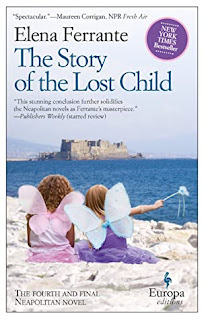
  Today’s topic is about narrative and novels. I’ve been listening to what is a 36-hour audio book titled The Story of the Lost Child by Elena Ferrante . I’m a huge fan of autobiographies and biographies, and I love reading about other female authors. The narrator Elena Grecco tells one of the most shocking and compelling stories about her life in Naples.   In discussing this book’s narrative with my friend, he asked me, “Why is it so shocking when she reveals important plot points. You just don’t see it coming.” Ferrante is gifted at telling a story through what I called “immediacy,” which means she tells the story exactly as it unfolded to her. In real life, we don’t have foreshadowing and little breadcrumbs that get dropped when something major is about to happen. We might see hints in a character’s behavior, but that’s all the hints we get in this kind of narrative.   As a result, Ferrante’s life experiences – and many are indeed dramatic and shock...

How to Stay Motivated on Your Projects

Image
  I hear authors routinely say, “I am writing a book.” However, I don’t see a lot of results from those declarations. A small percentage of authors actually produce a book. It seems that declaring you’re writing a book and really finishing a book don’t always go hand in hand. It’s not that people can’t write or aren’t talented, it’s really about motivation. How do you stay motivated to start and finish your book? Some of it has to do with authors who get bogged down in their own ideas of perfection. I’ve seen authors spin in circles around their first chapter. In fact, I’ve seen authors never get past their first chapters and stay stuck. These writers get caught up in every word and every little element of their writing. First, just keep writing and writing, and remember, you always have an editor who will help make the necessary adjustments. It’s easy to lose motivation if you can’t even move onto Chapter 2. So, keep momentum and just keep writing and writing. Lea...

Should I Create an Audiobook?

Image
  The audiobook industry is rapidly growing. In our mobile, fast-moving society, many commuters enjoy listening to audiobooks while they drive. The audiobook industry is projected to grow to a $15 billion industry by 2027. Huge opportunities exist for audiobooks, and many authors have asked about how to create them. Since I had to do a little research on the subject, I thought I would share what I know and learned.   Question no. #1 – Are there programs to help me?   Yes, there are many software applications created specifically to record audiobooks. Google: How to create an audiobook , and dozens of applications and providers appear. I don’t know that much about them – yet. So, you need to investigate which one sounds like a good solution. As we always want, ensure your selection is easy-to-use and doesn’t require taking a class (unless you want to take a class).   Question no. #2 – What is Audibles (Amazon’s platform)?   If you don’t have ...

What's the one thing all writers need?

Image
  I have a question: What is the one thing that all writers need to be successful? Is it talent? Is it a great literary background? Is it a great story? I'm sure you can think of many other potential answers. So, what do you think it is? That one magical secret for success? The answer: CONFIDENCE Confidence will take you further than all of the things listed above. Why? Because confidence means you believe in yourself AND your skills and expertise to deliver all of those things listed. Confidence gives you the motivation to call literary agents until you find the one who is right for you. Confidence means being fearless and approaching publishers. Confidence means you don't just believe in your work, you believe in YOU. How do you achieve confidence? It's not magical. It's about working and gaining the knowledge and insight that YOU know your stuff. You know you have all of the skills listed above. And you KNOW you can do anything. When you've achiev...

Use Your "Corona-cation" to Write or Read

Image
Since we have to stay home and weather this "storm" it's time to get to things you can do without leaving the house (and two of them benefit our industry) - write and read. You can treat this indoor lifestyle as an opportunity to get caught up on those things you can't always focus on.   Time to get back to writing, especially if you're accustomed to flying by the seat of your pants. Take this as an opportunity to lose that commute time to write. Most industries are asking their workers to work at home. When you lose that commute time, you'll find more time to do other things. How about using that extra time to finish your book?   I like to write in the late afternoons after I've finished my main project work. I used to commute at least 60 minutes total a day. Why not use those same 60 minutes as time just to sit down and work on your book. You can do it in the morning or late afternoon like I do.   If you already write as a ca...

Writing from Experience

This week's topic: writing from experience. Many years ago I went and listened to Alice Walker , who wrote The Color Purple , speak about writing. I was in my twenties and eager to make it as a writer. As is the case with most young people, I thought I had the emotional depth to tackle any subject. Walker said she didn't hit her stride as a writer until she hit her forties. Screeeeeccchhhh! What? She added, she didn't feel she could have written her great works as a young writer without experience to tell the story right (I'm paraphrasing).   I was young. I wanted to write - and I wanted to write something that would resonate with people, make them think. Was I too young, as Walker was suggesting? The answer is complicated. As writers we do need experience to pull from, which gives us a frame of reference. Can you still write about something you've never experienced? Yes, but it's still based on a frame of reference. You write from your knowle...

Tips to Improve Your Writing Process

I get asked all of the time how I write my novels and my techniques. I am a unique writer in this way. I don't have a specific technique. I write straight from my imagination and allow the words to pour on the page. It's how my brain works. I can't really give "my" method an explanation. I like to think of it like a pipeline from the Universe to my brain. Maybe it's much like those math people who can look at a problem and solve it in their heads. It works in their minds. If I look at a math formula it looks Greek to me.   What I do tell writers is to develop their own process - the one that works for them. I can though provide some tips on how to develop "a" process. So, I thought I would share some ideas I've read about that other writers use.   Create a cast list and give each character a back-story and history . Describe their lives outside of the book. You don't have to use this information in the story, but it wil...

Writing Books: It's a Jungle Out There

Do you ever feel wishy-washy when it comes to your writing? I am constantly coming up with ideas and thinking they’re great ones. I’ll start something and just stop. I find I often lose confidence in an idea or become distracted by other projects. In my world, I am trying to hustle and make money. So when a paid opportunity arises, I always take it. Unfortunately, I then find my own writing falling to the wayside. My other issue is losing confidence in my finished work. Oh, now I know my new novel The Abused is a great read. My focus group comments were all positive. My sensitivity comes from concerns about the marketplace. I lose confidence it will sell. As a publisher I’m keenly aware of how competitive the book market has become and saturated with many self-publishers. It takes a lot of effort to move a book into the audience’s hands. Therefore, I am nervous to spend money unless I know I’ll have time to promote it. Are you feeling my points? As an autho...

Editor vs. Writer: What is the difference?

The professional editor conundrum. I discovered that many people mistake “editing” vs. “rewriting”. Perfect example is a lovely client who wanted me to “edit” his travel book. He mentioned that the previous editors had not done the book justice. When I reviewed his material, I realized “editing” wouldn’t fix the problem, but rather rewriting was in order. I explained to him that the reason he loved my work vs. the other editors’ work was because I wasn’t editing I was rewriting . Why did I need to rewrite him? He’s not a native English speaker. Since English was not his first language, he used many words and phrases either awkwardly or just wrongly. When you hire an editor, it’s his/her job to make grammar corrections, tighten sentences, and make overall content comments or rearrange organization. Editors are not writers. So, if you want your document to perhaps flow better or present a professional approach to its content, do not hire an editor. You need a writ...

Make Time to Write

Do you feel pressed for time? I do. I have multiple projects going on. I once read in the book The Secret that it’s all a matter of perspective. You always have enough time . We make time for things we prioritize. When it comes to keeping everything flowing and getting it all done I keep daily, weekly and monthly goals. I started this habit in college because I was taking up to 18 units and I needed to keep track of homework. Turned out this technique became invaluable to helping me to become an effective project manager. Another technique I apply is to keep in mind at all times I love what I do. I try to avoid feeling overwhelmed by just sitting down and getting things done one at a time. Even though I have work that is due all of the time I make it a top priority to make time enough to work on my own book The Abused . When it comes to ensuring that my precious time gets applied to my own work too I just do it . Here are some tips to help you effectively manag...

Top Common Mistakes Writers Make

On-the-Nose Dialogue - On-the-nose dialogue that tells the reader exactly what you want him or her to read. No mystery or intrigue, but just saying it all outright in "on-the-nose" statements are hallmarks of weak writing. Story Exposition in the Dialogue - Telling your story through dialogue in long monologues. Please tell the story in the narrative unless it's a narrator. Repetitive use of characters' names - How often do you actually say someone's name? Not often, so please avoid the same in your writing. One voice, many characters - All of your characters sound like a middle-aged white guy. Make sure you have unique voices for each character. Tip: use a real person you know or actor or actress and base your character on his or her voice. Study how the person talks, expressions, tone and inflection. On-the-head storytelling - Not to be confused with "on-the-nose", because this is storytelling where you don't respect yo...

3 Important Tips to Sell Books

Image
I've watched readers and behavior when interacting with books. Here are the three things you want to be your very best to close a sale: 1. Enticing book cover -- the very first thing that lures in readers is a great book cover. A great book cover is the first draw to get a prospective reader to pick up your book. It's the first step toward a sale. 2. Fantastic title -- readers walk up, they see an intriguing title. A great title should be interesting, mysterious, intriguing, and not so own the nose direct that it won't spark the question, "What is this book about?" Note: If your title is esoteric or unique, make sure your subtitle tells the reader what the book is really about. Your subtitle should be direct. 3. Captivating back-cover copy -- reader picks up book based on cover and title and what does he/she do next? Flip the book over and read the back-cover copy. I've learned that you need to make sure your copy reaches the right audience. My boo...

The Abused: Chapter 14

14             Sandra walked off the elevator in a confident stride. Just then Darian came around the other corner away from Merry’s office. She was chewing her fingernails and looked very edgy. She saw Sandra and stopped and waited for her in front of her office.             “Hey, you know, I need some gum. Can I have some gum? Do you have any?” she frenetically shot off these questions.             Sandra stared at her. Her hair had thinned and fallen out so it was scraggily looking. The sores on her face had at least healed and scabbed over since her arrival. But judging by her hyper mood and her shifting eyes, Sandra wondered if she was high. She unlocked her office door and allowed Darian to walk in first. She went to her desk and pulled out a plastic-cup-shaped Orbit mint-gum container. She ...