Posts

Showing posts with the label Grammar

Three Common Mistakes Writers Make

1. Thinking that their editor is the same as a final proof and copy edit. Reality with books which are often very long is that an editor can't necessarily catch everything. Notice on most mastheads of magazines that you have several layers of editing -- the editor-in-chief, editor, managing editor and copy editor. The reason for the layers is that each role is slightly different. Even if you have a reasonably talented editor to clean up and help your copy shine, a final proof will still be a necessity. I try to tell writers this and often hear they don't need that final proof, which is completely wrong. When I end up showing them via a quick proof of a few pages how that belief is incorrect, it often opens their eyes to the true difficulty of getting a completely clean draft. 2. Not understanding that a Word document and a book template are two different sizes and produce a different page counts . I ask writers the size of the book, and they quote from the Word document. Sta...

Writing: It's Not Math ... Well, Maybe a Little

Some people love that with math the answer is always the same: 1 + 1 = 2. In English and grammar the rules are similar. You always use commas. You always use periods. Spelling though has its nuances. Did you know in American usage toward is always toward and in British UK usage its towards. One of the things that makes learning English so difficult is it's sometimes like a mechanical process of memorization. You have to admire those who can truly win a spelling bee. These people would have to know minor pieces of information like the difference between when you hyphen in-between (what does it mean in context defines the use of the hyphen) or in between. Tricky usage can make an editor crazy who doesn't have a photographic memory to even remember there is a hyphen in some cases. Two words that are really one word and so on. When people say they don't need an editor or their documents are completely perfect without mistakes, I nod with a glazed looked over my red, tired eyes...

The Exclamation Point -- Why it's Overused ... !!

The poor exclamation point is always so wrongly accused of overuse. The exclamation point is often double or triple used (as if the first time it's applied isn't enough). Ever notice how people sometimes think that !! makes their point seem even more important or LOUD (we'll dissect the overuse of all caps some other day). I have important information to share for professional writers (or those who aspire to such status). Have you ever read a novel where someone used the exclamation point twice or triple? Okay, I will clarify my point. Ever seen a novel where it was acceptable to use use the period twice? .. you know just to say PERIOD -- PERIOD! Oh, sorry ... PERIOD!! Are you starting to feel enlightened now about overuse about the exclamation point? I have another one for you. You do realize that an exclamation point is not friendly with a question mark?! I see that one used all of the time as if it's correct, too. I'm sorry if you're feeling terribly sad abou...

The Days of Yore in Publishing

Today's question from an author is a common mistake and misnomer. If you want the new rules of style in terms of word processing and digital printing, invest in the book The Mac is Not a Typewriter . Today's question: do you still put the double space after the period?  Old rules of business writing and even academic writing suggested we use the double space. Today the computer does it for us, and there is no need. Word processors put the right spacing in for the user. Older writers unfamiliar with the change in the rules still add the double space, which is unnecessary and removed during editing. The double space was used in typesetting methods where typesetters physically put the "plates" together with the words and used the spacing to distinguish between the end of the sentence and the start of the new one. Since the computer can now automatically do it, and the new digital printing methods don't require plates, it's gone away. Underlining titles now ...

Word Crimes

Image
This video is perfect from "Weird Al" Yankovic! Reminds me of Saturday morning cartoons where I learned things like "conjunction, conjunction what's your function ..." Yes, I just gave away my age, again! Enjoy the video and maybe learn something new like what is the Oxford comma. We don't like the Oxford comma around here, but other strict grammarian have a love affair with it.

Mistakes on Professional Signage

Image
The perfect picture and view from the historical site lakeside.   Style, usage and grammar mistakes galore. Where did I see these mistakes? In a casual email? On a text? On a sign somewhere? No, not exactly. I saw these mistakes "littering" the historical signage sprinkled along a trail in Tahoe City to celebrate the town's 150th anniversary. At the end of the tour, I noticed that the local rotary club got credit for the signs. At that point I realized the "road to messed-up signs is paved in good community intentions but weak grammarians." Now to the average eye the mistakes wouldn't necessarily leap off the signs, but to the well-trained eye the errors flew off those plaques. Misused commas in strange places, no hyphenation on words that should have been hyphenated -- those two mistakes were the most common. I can only imagine how many corrections a professional editor would have left behind on that copy had one only had his or her hands on it. I imagi...

Things I love or don't like ...

As is the case in life, we have things we like and we don't like ... I have a very balanced list designed to either make you nod or write me a protest letter. Here it goes ... Arrogance + Ignorance = :( --I don't like arrogance not in the least. Arrogant people think they know everything, and it almost seems they don't know anything. Arrogant people try to tell me things that my educated mind refutes, but also they stand on it like it's a solid platform. I especially dislike arrogant people whose opinion about something like my profession that I do know backward and forward turns into absolute truth (for them) and they seem to know so much they will take it upon themselves to argue and argue and argue. Well, truth is ... I won't engage so that's a waste of time anyway. Humble, Open Willing --I DO like humble people. Humility goes a long way toward success and an open willingness to learn and understand that by God's grace, "No, you don't know ev...

Comma Wars

Does anyone really agree on the use of the comma? Today on HARO (Help a Reporter Out) there was a link about comma usage. Just the other day my editorial intern discussed the Oxford comma usage. Do you have any idea how many different style guides exist? Just to name a few: Strunk and White, AP Style, Chicago Style, Masters of Language Arts ... and probably others. And yes, there is the Oxford too. I always chuckle when the infamous Grammar Police go nuts about certain complaints that are style-related. It is the comma though that has the most "proper" usage rules (and naturally the rules conflict). If you're running a publication, the rule is simple: be consistent . Some publications have their own style guides. You can make up certain rules that are your editorial guidelines and the preferred style. The key is to apply the rule the SAME way every time. In that case you can easily point to your own style rules if someone says something. Believe me, the Grammar Police ...

Tips for Editing and Proofing

At my recent writer's group meeting we began tittering about editorial tricks. One of the women sighed that between all of the style books ( AP Style, Chicago, Strunk and White ) it's hard to get it right or know what is right. I agree. As I imparted some of my tricks, the group got excited. So I thought I would share some of those tricks on the blog. Define X . Use Google and plug-in "define ___" and the proper usage and spelling comes up. This technique is especially useful for hyphenated words and idioms. Idioms . Do we all know the proper usage of certain idioms? Expressions like first come, first served is the perfect example. Is it first to come first to serve? No, it's what I wrote, but an idiom wouldn't necessarily be a common word in a dictionary, right? I always use the "define [idiom]" approach and Google. The search provides the proper expression of the idiom and the proper grammar for the idiom, too. Comma usage . Every style book ...

Writing a Page-Turner, Part II

Yesterday's blog discussed eliminating exposition (AKA minutia) from your writing to help quicken the pace of the story. Today we're going to talk about the distractions -- those words and extra, unnecessary thoughts that bog down the story-telling process. The reason I am focused on these details is because I am doing the final revision on my novel Body in the Trunk so I am paying extra attention to these things myself. What do some people consider distractions? Let's put a simple one in context with dialog. You can have too many "he said's, she' said's" and all those extra said's or ask's or whatnot can distract the reader from the actual flow. So here is the tip: if you've set up a scene clearly with two speakers you need only occasionally identify the speaker to keep it clear . You do not need to identify the speaker every sentence. In the scene set up, identify your speakers and then sparsely add the identifiers. Also, another tip: ...

Things I find hard not to do

I can't think of anything meaningful to share this morning, so I'll just amuse and entertain you. Here is a list of things I find hard not to do... Touch my face : are you smiling. You know they say to avoid spreading germs try not to touch your face. Don't rub your eyes if you're on an airplane (for example) to avoid spreading germs. Of course, the minute I think, "Don't touch it," I just can't seem to stop myself. I feel an itch. Oh, it's my nose. My eye is bothering me ... and on and on it goes. Avoid being the first to text my man . I said in the last blog not to be the chaser. Sometimes though the urge to hit the text first just can't be quelled. I am pretty good, though. I would say out of seven days, I usually score about five out of seven ... well maybe more like four out of seven ... no, five ... LOL. Depends on the week. Girls keep him on his toes. Make and try not to break the first-text rule. Remember what I said, "Guys l...

Write from Experience

I remember listening to Alice Walker, author of iconic books such as The Color Purple , speak at UC Davis. I was about 20-years old. She talked about life and experience. One thing she said was that she didn't think writers had anything to really say until their 40's. I was 20 -- and this was discouraging. At the time I remember defiantly thinking I had plenty to say. Well years later, I think I'm inclined to agree. I really didn't have any life experience to draw on. I could imagine the feelings and the experiences all right, but did I understand the "heart" of the experience? No. I had no resources to draw perspective. Fast forward to my 40's, and I've had plenty to say and much experience to understand. In my new book Body in the Trunk , the story revolves around a paranormal romance and duplicity. Having a much broader experience with different kinds of love helped create the layers of emotion in the story. It enabled me to give the character...

Common Mistakes Writers Makes

I edit and read books every day. I know some people are thinking, "You get to read books for a living? Cool! Where do I get that job?" (BTW, if you want that job get a degree in English and find a job as a book editor). I once had a friend of mine say, "I never see you read." Well, friends I read every day all day. So when I'm on vacation don't expect to see my nose in a book. Anyway I digress ... so in reading every day and analyzing writing I see common mistakes. I thought I would share: Redundancy : how many times in a sentence or paragraph can you use the same word twice? The answer is never. It reads and sounds better if you use the same word once. I always suggest that you pull up the Thesaurus if you're having trouble coming up with new words. My joke, "A Thesaurus is a writers best friend." Once in a while it's understandable when you have to use a certain word more than once, but the general rule is to avoid it. Its vs. It'...

Storytelling Tips: Show don't Tell

Some writers have a bad habit of doing what we call "telling and not showing". They will do this in two different ways: #1 Underdeveloped scenes aka as impatient writing -- to progress a story faster than an ice melting on 220-degree pavement, writers will in one sentence or less tell you a major plot point. I call this impatient writing. The writer is often much more excited to get to the action and climax then to develop important plot points. For example, telling us a character got summoned to the police station for questioning and then just skipping to the after scene and briefly saying what happened. A police questioning scene is ripe for drama. Why would you skip over it, especially if it's an essential plot point. Sometimes writers just aren't as fascinated or excited about the scene so it's easier to just jump over it. This leads to... #2 Lack of story development -- when you skip really fast over important plot points, you are making your storytellin...

Cupcake Friday

Image
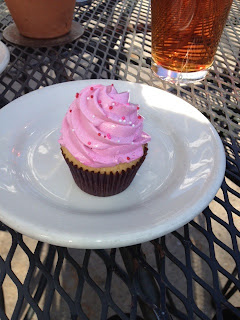
It's cupcake Friday LOL ... I've decided to redefine Friday from "thank God it's Friday" to "Cupcake Friday" ... yes, more random thoughts for yours truly. Sometimes I have to get somewhat random to keep the content flowing. If you must know the truth, I loved the "look" of the pink cupcake. The frosting was light and tasted like whipped cream. Speaking of "whipped cream" you ought to check out the scene in the forthcoming 3L Publishing book Vengeance is Now by Scott D. Roberts where our "man-whore" and private detective brings out the bottle on his girlfriend Nicole and does some fun stuff with it (and that's the whole "teaser" for now ;) ... well, here is my thought about whipped cream in the bedroom: Yes, I'm adventurous and know how to have plenty of fun; but I'm a little bit of a neatness freak and, well, whipped cream sounds fun and tantalizing, but in reality I bet it's sticky and mess...

"Word Me Up" Tonto

Okay, it's Friday -- and we'll call it "not-serious-day" ... because I am not in a serious mood. So, here we go "Ready to Ramble". All right so I think I should share some of the most common grammar and spelling mistakes I see perpetrated by the masses -- and I'm just itching to correct them. Since I can't correct a billboard, I guess I will just share here on my blog and hope the news spreads throughout the land ;). Alright vs. All right -- it's not all right to be alright! Are you smiling yet. No, my friends alright is incorrect. I know this may shatter a glass house or two, but it's always "all right" ... all right? Toward vs. towards -- guess which one? It's America, is it not? Yes, I believe I am blogging on American soil. British usage sanctions towards. American usage embraces toward. Fair enough! So given that I own an American publishing company (www.3LPublishing.com ... plug), we will go for toward. Backwards, ...

Got a Book You Wanted Edited? Need a Book Coach?

Every time you shift and change your life, you create what I call the new normal. I feel really fantastic today. I am in the middle of my new normal. I'm adjusting to my life as a single parent. My kids are here. My eldest climbed in my spare walk-in closet and organized all of the boxes. We have a new bed being delivered today for him to sleep on, which completes the office/spare bedroom. Why does this matter? It's really about finally settling in and accepting and adjusting to my life as it is. I have so much to look forward to at this point, too. California Girl Chronicles script polish wrapped up yesterday (pretty much), and this process coming to an end with an important step forward. The script is why I'm here. I am moving it forward with my producer to pitch to TV executives. The experience of working with someone of his experience and caliber has been rewarding. He's teaching me a lot even if he doesn't know it yet. I've been watching with a keen eye ...

The Three Mistakes Writers Make

Bogged down in exposition : so many writers will spend so much time setting the stage for the drama to take place that they lose the reader in the sheer volume of the details. Many readers will, in fact, check out of the story long before the aforementioned drama even has a chance to occur. Too much exposition is like sludge to the storytelling process and should be avoided. You can easily and effectively set the stage and then just let the drama unfold. Too much minutia : as a reader, I really get distracted and often discouraged by writers who fall in love with the minutia. Whether it's a novel or screenplay, you should only include descriptions of things that move stories forward. In screenplays, you should absolutely only mention that which is relevant to the story, period. You should not add unnecessary elements that don't matter. It's distracting and irrelevant to the actual story. Just ask yourself, "How does this push the story forward?" If it doesn'...