Posts

Showing posts with the label storytelling

The Compelling Narrative of Elena Ferrante
Image
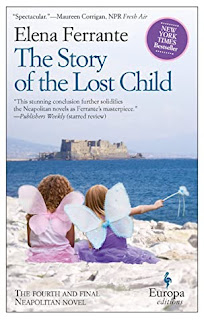
  Today’s topic is about narrative and novels. I’ve been listening to what is a 36-hour audio book titled The Story of the Lost Child by Elena Ferrante . I’m a huge fan of autobiographies and biographies, and I love reading about other female authors. The narrator Elena Grecco tells one of the most shocking and compelling stories about her life in Naples.   In discussing this book’s narrative with my friend, he asked me, “Why is it so shocking when she reveals important plot points. You just don’t see it coming.” Ferrante is gifted at telling a story through what I called “immediacy,” which means she tells the story exactly as it unfolded to her. In real life, we don’t have foreshadowing and little breadcrumbs that get dropped when something major is about to happen. We might see hints in a character’s behavior, but that’s all the hints we get in this kind of narrative.   As a result, Ferrante’s life experiences – and many are indeed dramatic and shock...

The Power of Storytelling

Image
Today, new titles like Chief Storyteller are being used in place of writer or marketing specialist. Corporate America embraced it, because leaders recognize the power of a great story vs. just generic information. If you can tell a fascinating story about something, it will intrigue, entertain, and attract people’s interest. For example, no one wants to hear just buy this or buy that; they would rather hear a great yarn. When I used to do speaking engagements about my books, I sold the most books when I sat and told stories related to my book. People identify with the stories and relate to them. Storytelling is a great technique to sell both nonfiction and fiction. In the case of nonfiction, you can take ideas and concepts from your book and tell a story about it. Fiction you can pull a story right out of the book (read a chapter). Even if you’re not able to do in-person speaking (Covid) you can still tell stories through Zoom or any other audio or video meeting. ...

What's the one thing all writers need?

Image
  I have a question: What is the one thing that all writers need to be successful? Is it talent? Is it a great literary background? Is it a great story? I'm sure you can think of many other potential answers. So, what do you think it is? That one magical secret for success? The answer: CONFIDENCE Confidence will take you further than all of the things listed above. Why? Because confidence means you believe in yourself AND your skills and expertise to deliver all of those things listed. Confidence gives you the motivation to call literary agents until you find the one who is right for you. Confidence means being fearless and approaching publishers. Confidence means you don't just believe in your work, you believe in YOU. How do you achieve confidence? It's not magical. It's about working and gaining the knowledge and insight that YOU know your stuff. You know you have all of the skills listed above. And you KNOW you can do anything. When you've achiev...

How to Write a Page-Turner

Image
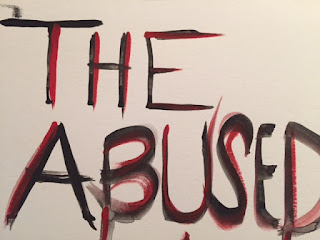
I just finished my new novel titled The Abused . I also received feedback from my focus group of early readers. Responses were all extremely positive with the common comment being “I couldn’t stop reading it.” I get asked all of the time, “How do I write a page-turner?” My answer may sound simple, but it’s not easy to do. The main ingredient to writing a page-turner is to create constant intrigue. Your reader must be interested and intrigued enough to want to keep reading. How do you create intrigue? Tip #1: Show don’t tell . Last night I read a chapter from The Abused. “I love the way you built up the tension. How did you do it?” So let me give you the set up scene from the book… On this outing, Frank was in his usual laid-back mood. Jonesy had gotten up early ready to jog. They were standing in front of the morning fire watching the gray tin coffee pot that sat on the grill begin to bubble up. Jonesy wore a green jogging suit, and Frank had on...

The Little Bear Who Wanted to Fly

Image
Children's Picture Book Author: Carol Shaver Illustrator: Rachel Smith This enchanting new children's book from my company 3L Publishing was an absolute joy and pleasure to publish. The sweet author who is full of moxy and passion wanted her precious story about a little bear named Cubby who dreamed of flying taken from her imagination to the page. She was able to achieve her goals by working with the incredible talents of Rachel Smith, one of our favorite illustrators. The book's theme is simple: no dream is impossible! All children's books should be distilled down to simple concepts. When you can distill your story thematically down then the story becomes focused and clear to the reader. For children a simple idea is the best. This book is also uniquely different because its size is 11 x 14, which means it's tall and wide. Carol was thrilled with the idea so that little eyes and fingers could take in the vibrant action depicted on the pages. Turning the...

What Makes a Page-Turner

The big revelation in storytelling ... pacing! How you pace your story can either absorb your readers or bore them. It's easier to define pacing when it comes to a screenplay. In a screenplay you have a short space to write either dialog or action. You also have to write these things in the average of 120 pages. The action cannot be bogged in minutia. You set the scene simply and quickly and move on. In books, you have a much wider berth. But if you want to keep the story moving and well paced then don't get bogged down in narrative or exposition. Yes, you do want to paint the scene with the right colors but you don't want to describe every last detail down to the color of the kitchen sink unless that is somehow important to the story. How can you pace your book? Move the dialog along and don't have random discussions about things that don't belong in the story or reveal anything interesting about your characters that the audience needs to know. Keep the scenes...

True Blood Final Season

Image
True Blood -- Season 7 Episode 1: Vulture I was hugely disappointed last season with the show's declining writing after creator Alan Ball changed directions and left the series in the hands of the other directors and writers. As this season opened I was also a little apprehensive with the prospects of the "zombie-vamp" mutation story. But as the show began with an explosive slaughter of humans, and the fates of some show favorites like Arlene and Holly on the line, I was quickly absorbed into it. I liked the way they got back to basics with Sookie being able to read the entire "accusing" citizens' minds as they blamed the "vampire whore" for inviting this havoc upon them. The show had deviated so far off her fairy powers in connection to citizens in recent years it lost a little of its humanity. The intensity of the opening scene though immediately invited you in for an absorbing episode where we find Andy and Vampire Bill on the hunt to fin...

Movie Review: The Edge of Tomorrow

Image
Rating: ***1/2 I always love an intricate story (since I'm a storyteller) and admire the writer's ability to keep it all straight. The Edge of Tomorrow , the new Tom Cruise movie and co-starring Emily Blunt, was one of those movies with extreme thoughtfulness to details to make it work. The movie begins right as the world is about to be conquered by aliens called Mimics. Tom Cruise's character begins as a cowardly spokesperson who gets suddenly thrust in the invasion on the beach of France (think D Day in World War II). With absolutely no combat experience, Cruise is thrust right into the "shit" and within moments is not only being dropped from an airplane with no experience, but also lands on the ground to face the enemy. He is (naturally) instantly killed, but before his demise he lays eyes on Emily Blunt's character and a look passes between them, and then she dies and Cruise dies ... or so we think. All of a sudden, he wakes up with a jolt back to th...

When Characters Come to Life

I was talking to a fellow writer about character development, and she said the funniest thing: "Sometimes I almost feel embarrassed to be a voyeur in my character's lives." Many writers talk about how their characters take on lives of their own. I always chuckle and think we're a bunch of crazy people with imaginary friends. It's true. My characters imbue their lives in my mind with all the facets of who they are. As I tell a story it unfurls much like life. In this case, I typically have an end in mind while most of us don't know our "ever after". It's like sitting as fortune teller and seeing the future in the crystal ball of my computer. You know where the story is going but what happens in-between is a bit of an enigma until you actually get to that point in the story. Writers write stories in different ways. A friend of mine uses note cards and says his desk looks like a serial killer's shrine. I write stories straight from my mind...

Movie Review: Transcendence

Image
Rating: ***1/2 Transcendence was the type of thought-provoking script I would have written when I was still screenwriting (which I will return to doing in the future). The story revolves around the concept of uploading human consciousness into a mega data network that enables the invention and creation of nano technology to regenerate life. I studied nano technology back in the day, and the concept is indeed fascinating. In the movie, our professor Dr. Will Caster and his wife Evelynn are partners in life and work. After a terrorist organization shoots Will with a radiation-loaded bullet, he dies a slow terrible death. During his death "march" Evelynn figures out how to upload his consciousness into the network. The movie then turns into the government trying to stop what many believe is a bad thing that could destroy the world. I liked the movie. I thought it begged some interesting questions about technology and the human spirit. It was the type of movie in which y...

The Grand Budapest Hotel

Image
Rate: ****1/2 The Grand Budapest Hotel was genuinely quirky, but I would expect nothing less from Wes Anderson, whose other films deliver on his unique film and storytelling style. Told from the viewpoint of the concierge on the eve of World War I, the story unfolds from the viewpoint of the author who is told the story by the hotel's current owner Zero Moustafa who recounts how he came under the tutorship of the concierge, who is played impeccably by Ralph Fiennes.  It's a complex story and woven together through the narrative provided by Moustafa to the author who is also narrating, too. I know it sounds confusing, but it's not. The basis of the story is how the concierge comes to own the hotel and how through his brotherhood and mentoring with Moustafa he comes to own the hotel. The film highlights a bygone era when the concierge and "service" meant something -- and good manners. Loaded with scandal and intrigue, the film is compelling and utterly strang...

Why Flawed Characters are More Interesting

The archetypical hero in fiction: good guy or girl who goes on some kind of journey (the story) and comes out the other end even a bigger hero and more white than white. The hero is a vanilla character -- and most vanilla characters don't have striations of chocolate ... unless they are flawed. Flawed characters are, in my opinion, way more interesting to read. A flawed character is a good character at heart who is a little misguided and makes bad decisions or has weak judgment. Flawed characters are more complex. They are more interesting to read about and try to understand their motivations. To write a great flawed character, here are some considerations: Not too flawed -- avoid going over the top in character flaws. Why? Because there is a fine line between a hero and a villain. An extremely flawed character can make him or her not likeable. The key is to write a likeable hero or heroine who while flawed in some way has something you enjoy about him or her. In my first book C...

Character Arcs: the Journey

In storytelling writing characters with a flat, straight journey in the story doesn't work. Characters who start one way in a story and remain the same at the end aren't interesting. The character arc boiled down is about how the character starts at point A and ends up at point B changed somehow. Even in script writing this transformation is important to create a compelling script. How do you keep the character arc in mind. I'm going to give you an example from my forthcoming book Body in the Trunk. Evan Garner -- philandering player whose sexually irresponsible behavior always leads to his downfall. He meets the beautiful and sweet Mia with whom he intends to con and swindle of her stock options. Then he actually falls in love with her for real. And through his first real love experience he is put in a situation where he finally has to grow up to protect and not abandon her. He is redeemed in the end by his desire to finally do the right thing. So let's break th...

How do you write a page-turner?

The grande dame of goals to achieve as a writer is the ability to write a page-turner. Now it's a talent more than a skill in my educated estimation. So I'm not entirely sure I could explain how to do it except to discuss "pacing" and how that can draw in readers and hook them to the story so they can't put it down. Now "intrigue" comes into play here, too. Pacing though is easier to explain. Pacing is how you capture the reader's interest and hook them into wanting more. A slow-paced story won't have nearly the effect to grab the reader's interest. So how to you create pacing? Tip: Lose the abundant exposition . Nothing bogs down a story faster than too much exposition in a scene. For example, it's one thing to build a foundation for the setting, but also you can do too much. Give the reader an idea of a place or time without drilling into so much detail the whole scene gets lost in it. You can set up a scene early in the chapter, and ...

Storytelling: You Can't Break the Rules if You Don't Know the Rules

Did you know there is a difference between knowingly doing something in your storytelling process and just plain doing what you want to the point it will not attract a publisher? You must understand the structure and storytelling process in order to deviate from it. What do I mean? Well, I see amateur manuscripts where the writer clearly doesn't understand traditional structure, period. The writer will just do whatever he or she pleases, and it doesn't work because there is no context or construct in which the person is deviating. I will give you the reason why and an example. Readers understand certain principles about stories and how stories unfold. Readers have certain expectations about the reading experience, too. For example, readers expect characters to have something as basic as an understandable name. Now you say, what? Yes, I got a manuscript submitted once where the writer absolutely insisted the names be (wait for it) ______. Yes, you saw the right -- underlines for...

Movie Review: American Hustle

Image
Rating: ** This movie got great reviews by both viewers and critics, but in my review I would give it a mediocre thumbs down. The primary problem with American Hustle is it's a story loaded with unlikeable characters. You couldn't root for any of them -- not the conman or women or the FBI agent. It's always okay to have villains or bad people, but someone in a film needs to have some redeeming traits to make you root for someone ... anyone. The story is about a con-couple whose crimes get them roped into Abs-cam to get them off the hook. They are forced to con politicians in an elaborate scheme that eventually involves the mafia. The central couple's love for each other is muddied in the casting. The comb-over head conman is unattractive, and the girlfriend is very pretty. It becomes unimaginable why this beautiful woman would get involved with a married, unattractive guy with a kid. Maybe that mirrors real life in some respects, but really if he had been likable...

Movie Review: Frozen

Image
Rating: ***** I'm not a huge fan of animated film, but I take my nine-year-old daughter to the ones I think I can actually sit through and not get too bored. Frozen was one such film. My daughter begged for weeks in advance of its release, so I obliged. The misleading perception is that it's a film about a talking snowman named Olaf, but it's really about two princesses and their relationship. A friend of mine scoffed, "The snowman looked stupid so I didn't want to see it," and while the snowman is a part of the film he doesn't even show up until about halfway through it. The film opens with the two sisters playing together and enjoying the older girl's magic powers to create snow and ice through her hands. Upon an unfortunate accident that nearly kills her little sister, the older girl is moved into isolation (her powers are predicted to grow) to protect the other sister. This results in the older sister "colding" herself off from the...

Movie Review: 12 Years a Slave

Image
Rating: **** Another adult film released amidst the usual holiday popcorn flicks worth seeing. I'm just not a fan of the mega popcorn flicks unless they're just so great like Avatar you can't miss it. So with that thought I passed on Hunger Games and went for 12 Years a Slave . This film is like the 20th century version of Roots . It does nothing to glamorize slavery and takes a realistic perspective on the brutal reality of being a "free" man who loses his freedom when he's kidnapped and taken south to New Orleans and forced into slavery. As an educated man, he is self-aware and knows the difference between enslaved and being free. The film realistically walks the viewer through the emotional and physical breakdown of the man forced into degradation. The film is not uplifting. It's brutal and sad. Even at the end, you're not feeling inspired to do much more than hope slavery is ended forever everywhere in the world. The movie addresses the human...

Fiction Writing Tips: Story Layering

In working on my new book Body in the Trunk due out in Spring 2014, I started using a technique I'll call story layering. When I was working with Scott D. Roberts' critically acclaimed novel Vengeance is Now , which is receiving non-stop praise and making the list of the top fiction books of 2013, I noticed he used story layering. I will describe it the way I do in my book, which is not how Roberts did it. I have a story that is doing a past/present storytelling technique. As the detective in the book unravels the mystery, the reader gets to go back through the eyes of the victim to see what actually happened. Each chapter is a layer to the story that moves seamlessly back and forth between the story-telling methods and "layers" the story together, which is another way of saying "develops," too. But it's not just story development, it's truly a layer on top of layer. Kind of like a layer cake with each layer being glued with the frosting, which is ...

Movie Review: Bad Grandpa

Image
Rating: **1/2 Bad Grandpa is one of those juvenile delinquent comedies you can't help but laugh, but mostly about the expressions and reactions of those around the offending characters. Please note, I am no Polyana and I knew going into the theater exactly what the movie would most likely involve -- a lot of base potty humor. I was naturally right, but my teenage son wanted to see it, so I obliged. Do you know the type of movies where you laugh, and in the back of your mind you're thinking, "I shouldn't be laughing." Yes, Bad Grandpa qualified for this category of movie. I have to admit, though, I like a belly-ache laugh every now and again, and whether my higher sensibility was chastising me or not, I still laughed. For the record, though, I never enjoy watching children turned into little foul-mouthed versions of adults, and Billy, the little boy, became the subject of some jokes I didn't enjoy. The big one was the beer-drinking scene where he chokes...