Posts

How to Write a Page-Turner
Image
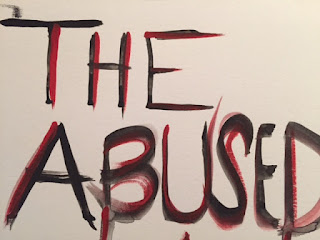
I just finished my new novel titled The Abused . I also received feedback from my focus group of early readers. Responses were all extremely positive with the common comment being “I couldn’t stop reading it.” I get asked all of the time, “How do I write a page-turner?” My answer may sound simple, but it’s not easy to do. The main ingredient to writing a page-turner is to create constant intrigue. Your reader must be interested and intrigued enough to want to keep reading. How do you create intrigue? Tip #1: Show don’t tell . Last night I read a chapter from The Abused. “I love the way you built up the tension. How did you do it?” So let me give you the set up scene from the book… On this outing, Frank was in his usual laid-back mood. Jonesy had gotten up early ready to jog. They were standing in front of the morning fire watching the gray tin coffee pot that sat on the grill begin to bubble up. Jonesy wore a green jogging suit, and Frank had on...

Comment on HBO's WestWorld

Image
I've been watching the new HBO series WestWorld and have found its storytelling methods rather intriguing. What makes this series very unique is the dual worlds in which the stories are unfolding. You have the "Park" world that is a throwback to old westerns and gun slinging and then you have the science fiction of the engineers behind the Park. The questions posed in the science fiction story line come out in the "hosts" who exist in the Park. The primary theme has to do with questions related to consciousness. While the hosts are grappling with their memories returning (and these memories have to do with the brutality and abuse the robots suffer at the hands of the guests), the guests are dealing with questions about identity and self. The intellectual capital in this series is truly fascinating. Are you a hero or a villain? Do the hosts want revenge and to decide upon their own story lines. Beneath all of this subterfuge is the corporate agenda for the p...

The Great "Editorial" Mystery

I just finished the final edit on my new novel The Abused . Thanks to DB Stearns for lending a hand on this project. Even given his adept input and fixes, I still found numerous mistakes, which just goes to show even the editor needs an editor. I always find it a reflection of either enormous egos or just inexperience when people contact me to publish their books and strongly say, "It doesn't need to be edited. My (fill in the blank with "English" professor, librarian, or best friend who is obsessed with grammar) edited it. It's fine.   These folks either don't understand that I'm 200 percent positive it won't be fine or they just don't want to make the necessary investment to really make it fine. Once I worked with an author who absolutely insisted every mistake had been caught. I challenged her and said, "I promise you there are mistakes. It has absolutely nothing to do with editorial prowess." She still challenged ...

A Traditionally Published Book Doesn't Make it Great

Now onto other topics ... today's topic is what I'm going to call "Traditional Publishing Snobbery" AKA as TPS. I've run into it my entire career and I wanted to refute why it's nothing more than elitist misconceptions driven by old school ideas.   Listening to TPS from unpublished authors who think they know everything is akin to listening to your 12-year-old lecture you about relationships and marriage LOL (yes, my daughter recently shared her "insights" on marriage). Many TPSnobs (not snobbery) hold the ancient reader misconception that traditional publishing act as a gateway to production of "great" literature. If you're not traditionally published then your book must not be any good. This fallacy is just that - a false truth.   Let me explain. Foremost, the top six traditional publishers are businesses, well, actually corporations. What are corporation designed to do? Make money. Traditional publishers like ...

Make Time to Write

Do you feel pressed for time? I do. I have multiple projects going on. I once read in the book The Secret that it’s all a matter of perspective. You always have enough time . We make time for things we prioritize. When it comes to keeping everything flowing and getting it all done I keep daily, weekly and monthly goals. I started this habit in college because I was taking up to 18 units and I needed to keep track of homework. Turned out this technique became invaluable to helping me to become an effective project manager. Another technique I apply is to keep in mind at all times I love what I do. I try to avoid feeling overwhelmed by just sitting down and getting things done one at a time. Even though I have work that is due all of the time I make it a top priority to make time enough to work on my own book The Abused . When it comes to ensuring that my precious time gets applied to my own work too I just do it . Here are some tips to help you effectively manag...

Tips for Great Storytellers!

I got asked a really great question by a fellow hiker, “What’s the difference between reading and writing?” He was walking behind us talking to his companion about math. They were doing math formulas. I turned and said, “Are you really solving math problems on the trail?” “Yes,” he replied enthusiastically. I admitted I was a writer, and math wasn’t “my thing.” Then he asked that specific question. My answer: When you read someone is sharing her imagination with you. When you write you’re sharing your imagination with the world. I like that idea, don’t you? I know many of my readers on this list are writers. We have the unique talent to tell a story in the written word and give to others. What a unique gift? I am grateful I can give something that amazing to the world. As writers we leave behind a written legacy of gifts to the world. Speaking of writing, my new book The Abused just came back from the first round of editing. So far, the focus group read...

Media Pitching No-No's

Sometimes when we’re working on certain projects, I send out queries through Help a Reporter Out (HARO). These queries put me on the receiving end of public relations pitches. In my business as a publisher and marketing specialist I spend half my day doing public relations activities. I often pitch the media myself. I thought I would take this opportunity to share some tips I’ve learned from being on the receiving end of pitches. Here are things that DON’T work: One-line pitches show laziness on the publicist’s part to not even attempt to convince me while his/her client is ideal for my project . I actually feel annoyed when I read a pitch that goes like this: my client Joe is perfect for your project. You can see that gives me nothing to go on. And the inherent expectation is for me to do my “homework” on Joe and be convinced. Suggesting I watch this video or go to this website or read all of the articles is another sign of sloppy public relations wor...